
Far below the surface of the Indian Ocean, a quiet contest is taking shape. China is pushing its submarines deeper into the region, Pakistan is taking delivery of modern Chinese-built boats and a large slice of India’s own fleet is sliding towards retirement. New Delhi has answered with one of the boldest naval projects in its history, the P-75I programme.
P-75I, short for Project 75 India, will deliver six diesel-electric submarines fitted with air-independent propulsion, the technology that lets a conventional boat stay hidden underwater far longer than the submarines the Indian Navy fields today. After more than two decades of false starts, the project moved decisively through 2025 and 2026 and now sits close to final government approval. What happens next will shape who holds the advantage beneath the waves for a generation.
Key Takeaways
- P-75I will deliver six conventional submarines with air-independent propulsion, built at Mazagon Dock Shipbuilders in Mumbai.
- Germany’s TKMS won the contest after Spain’s Navantia bid was disqualified in January 2025 for lacking a sea-proven AIP system.
- The boats are based on a next-generation variant of the German Type 214 design.
- Costs have climbed from about 43,000 crore rupees in 2018 to roughly 70,000 crore rupees by 2026.
- The first submarine is expected around seven years after the contract is signed, with one delivered each year after that.
What is Project 75I?
Project 75I is part of a 30-year submarine-building plan the Indian Navy approved back in 1999. The goal was simple on paper and hard in practice: build a steady line of modern submarines at home instead of buying them off the shelf abroad.
Project 75 versus Project 75I
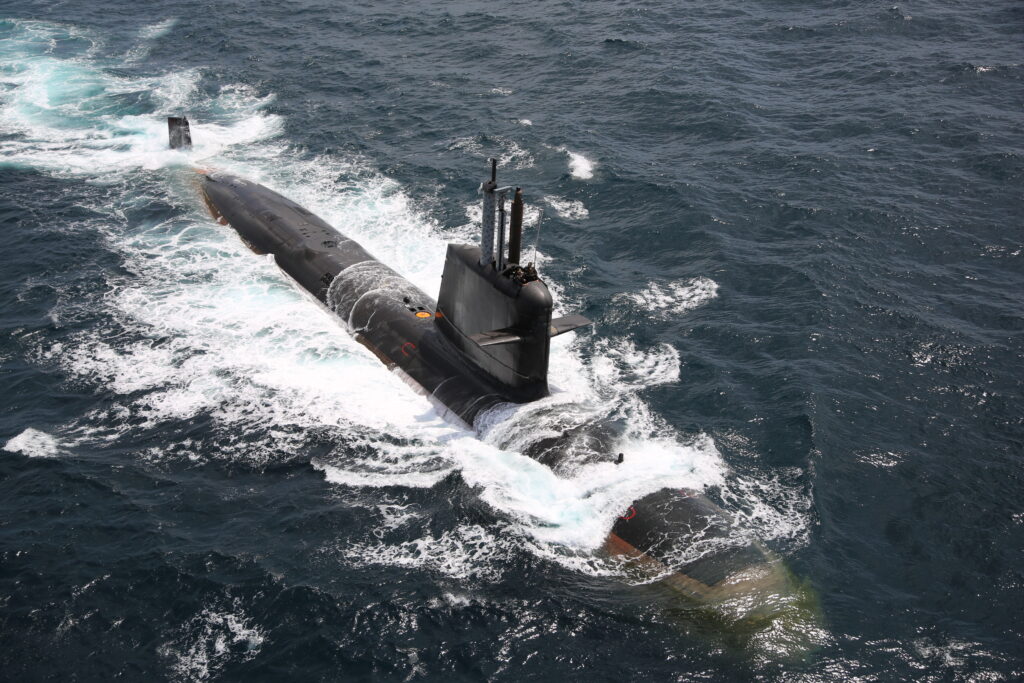
Photo: Indian Navy / CC BY 2.5 IN
Project 75 was the first leg of that plan. Under it, Mazagon Dock built six Kalvari-class boats, also called Scorpenes, with French help. The last of them, INS Vagsheer, entered service in January 2025. P-75I is the second leg and it raises the bar. These submarines will carry air-independent propulsion from the start and bring more firepower, better sensors and a larger share of Indian-made components.
The need for next-generation boats
A standard diesel-electric submarine must surface or raise a snorkel every couple of days to run its engines and recharge its batteries. That moment of exposure is when an enemy can spot it. AIP changes the maths and that is why India wants it across its new fleet.
Why India Needs P-75I
The numbers explain the urgency. India operates around 16 conventional submarines today and the count is set to fall as its oldest boats retire. China fields more than 60 submarines across its fleet, conventional and nuclear combined. Pakistan is bringing in eight new Hangor-class boats from China. The Indian Navy has long held a target of roughly 24 submarines, a level it has never reached. P-75I is meant to slow that decline.
China’s growing presence in the Indian Ocean
The People’s Liberation Army Navy now operates one of the largest submarine forces in the world and sends its boats into the Indian Ocean with rising frequency. Chinese access to ports such as Djibouti and Gwadar gives those deployments staying power close to India’s shores.
Pakistan’s submarine modernisation
Pakistan is acquiring eight Hangor-class submarines from China, fitted with air-independent propulsion of their own. That programme will sharply lift the quality of Pakistan’s undersea fleet over the coming years.
An ageing Indian fleet
Many of India’s submarines, the Russian-origin Sindhughosh class and the German-origin Shishumar class, are well past their prime. The six new Scorpènes help, yet they do not carry AIP yet. P-75I is meant to deliver numbers and modern technology together.
Key Features of the P-75I Submarines
Air-independent propulsion
AIP is the heart of the programme. A fuel-cell system lets the submarine generate power without air, so it can stay underwater for around two weeks at a stretch rather than a few days. Less surfacing means less chance of detection.
Stealth
The boats are built to run quiet. Sound-absorbing coatings, low-noise machinery and a refined hull shape reduce the acoustic signature that hunters listen for, making the submarine far harder to track.
Sensors and combat management
Modern sonar suites and an integrated combat management system tie detection, tracking and weapons release into one picture. The crew can identify threats sooner and act faster, which matters most in crowded coastal waters.
Land-attack and anti-ship punch
P-75I submarines will carry torpedoes and anti-ship missiles and the design allows for land-attack missiles too. That gives a single boat the reach to threaten warships and shore targets alike.
Endurance
Longer submerged endurance lets these submarines patrol farther from base and loiter on station longer, holding chokepoints and sea lanes that matter to India.
Strategic Importance for India
A submarine force is built around sea denial, the ability to make an adversary’s warships think twice before entering a stretch of water. Quiet, long-endurance boats do that better than any other platform.
These submarines also guard India’s sea lanes of communication, the shipping routes that carry the bulk of the country’s trade and energy. By holding the approaches to the Indian Ocean, P-75I strengthens maritime deterrence across the region. The programme supports India’s SAGAR vision of security and growth for all in the region and feeds directly into its wider Indo-Pacific strategy, where credible naval power underwrites diplomacy.
The Contenders and Industrial Partnerships
P-75I ran as a contest under the Strategic Partnership model, which pairs a foreign designer with an Indian builder. Two teams reached the final stretch. Germany’s TKMS partnered with the state-owned Mazagon Dock, while Spain’s Navantia teamed with Larsen and Toubro.
The Navantia bid fell away in January 2025, disqualified mainly because its AIP system had not been proven at sea. That left TKMS and Mazagon Dock as the sole compliant bidder. The two firms completed the concept design work by August 2025 and entered contract negotiations soon after. The submarines will be based on a next generation version of the German Type 214 design.
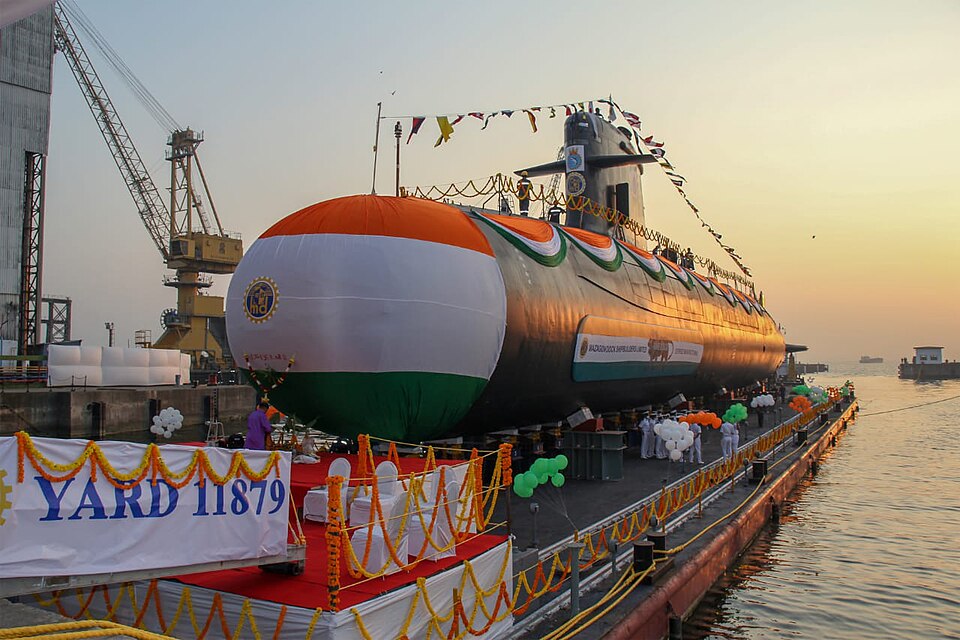
Photo: Indian Navy (GODL-India)
The Type 214 pedigree
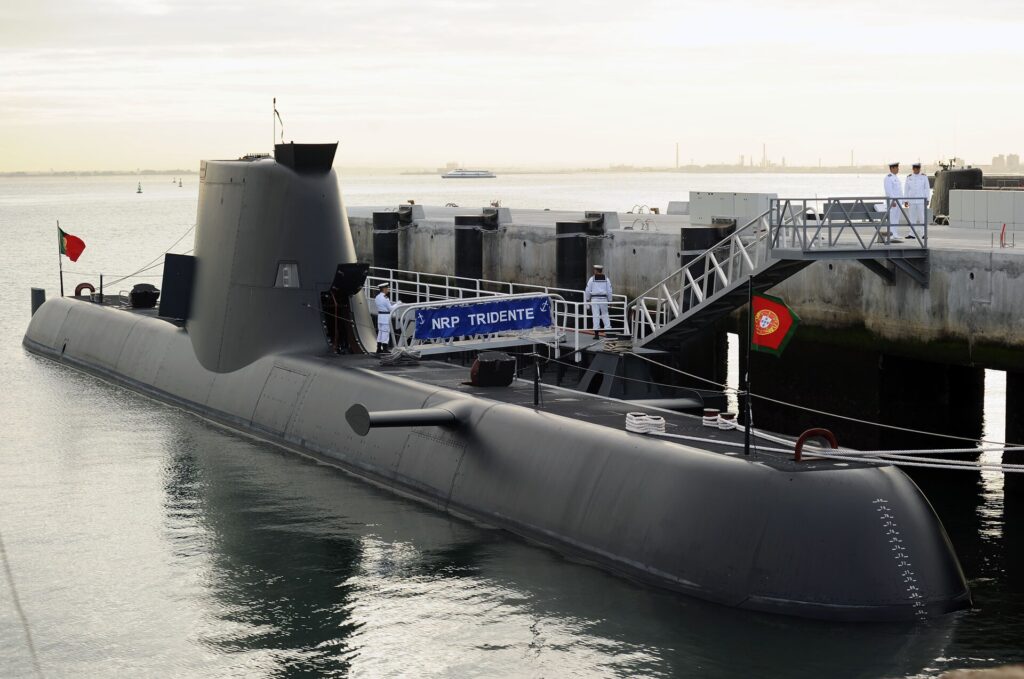
The choice of the Type 214 brings a proven design to the table. HDW built it in Germany purely for export and four navies already operate the class: Greece, South Korea, Portugal and Turkey. South Korea runs the largest fleet, with nine boats built under licence at home, the very build-at-home model India now follows.
The baseline Type 214 displaces about 1,860 tonnes submerged, carries a crew of around 27, mounts eight torpedo tubes with Sub-Harpoon anti-ship missiles and can stay at sea for roughly 84 days. Its fuel-cell AIP lets it sit submerged for up to three weeks. India’s P-75I boats will be larger, a next-generation variant of around 3,000 tonnes shaped to Indian needs, so they will not match the base model figures one for one. What India buys here is the pedigree of a battle-tested hull and the German know-how to build it.
Technology transfer sits at the core of the deal. Indian content starts at 45 per cent on the first boat and rises to 60 per cent by the sixth and TKMS will pass on submarine design and manufacturing know how. The aim reaches beyond six hulls: India wants the skills to design and build its own submarines in future, the true measure of the Make in India push.
Challenges and Delays
P-75I carries the scars of a long and tangled procurement. The project was first cleared in principle years ago, yet trials, paperwork and negotiations stretched the timeline well past a decade.
Cost is the loudest worry. The estimate has roughly climbed from 43,000 crore rupees in 2018 to around 70,000 crore rupees by 2026, which works out to a price per boat closer to a surface warship than to earlier submarines. Technology transfer is the other sticking point. India has paid heavily for know how across past programme’s without yet gaining the ability to design a submarine on its own.
Delay itself is a cost. Every year the contract slips, the Navy’s fleet ages a little more and the gap with regional rivals widens.
How P-75I Fits into India’s Long-Term Naval Vision
P-75I is one piece of a larger plan. Alongside it, India is developing an indigenous conventional submarine under Project 76 and it has cleared work on nuclear-powered attack submarines under Project 77. At the top of the underwater fleet sit the Arihant-class ballistic-missile submarines that carry the sea leg of India’s nuclear deterrent.
Seen together, these efforts sketch a 21st-century underwater force: imported designs built at home to learn the craft, indigenous boats to own it outright and nuclear submarines to project power far from shore. P-75I is the bridge between buying and building.
Conclusion
The P-75I programme matters because it answers two needs at once. It hands the Indian Navy modern, quiet, long-endurance submarines at a moment when the Indian Ocean is growing more contested and it pushes Indian industry up the steep learning curve of submarine construction. The road has been slow and the price has risen, yet the direction holds firm. If the boats arrive on a steady schedule, P-75I will shape how India guards its seas for the next generation.
Frequently Asked Questions
What is the P-75I programme?
P-75I, or Project 75 India, is the Indian Navy’s plan to build six advanced conventional submarines fitted with air-independent propulsion at Mazagon Dock in Mumbai, with German firm TKMS as the technology partner.
How is P-75I different from Project 75?
Project 75 produced six Kalvari-class Scorpène submarines with French help. P-75I is the next step, with boats that carry air-independent propulsion from the start, stronger weapons and sensors and a higher share of Indian-made content.
What is air-independent propulsion and why does it matter?
AIP lets a conventional submarine make power without surfacing, so it can stay submerged for around two weeks instead of a few days. Less surfacing makes the boat much harder to detect.
How much does the P-75I programme cost?
The estimate has risen from about 43,000 crore rupees in 2018 to roughly 70,000 crore rupees by 2026, driven by technology transfer terms, indigenisation and years of delay.
When will the first P-75I submarine join the Indian Navy?
The first boat is expected around seven years after the contract is signed, with the remaining five following at about one a year, so deliveries will run into the 2030s.