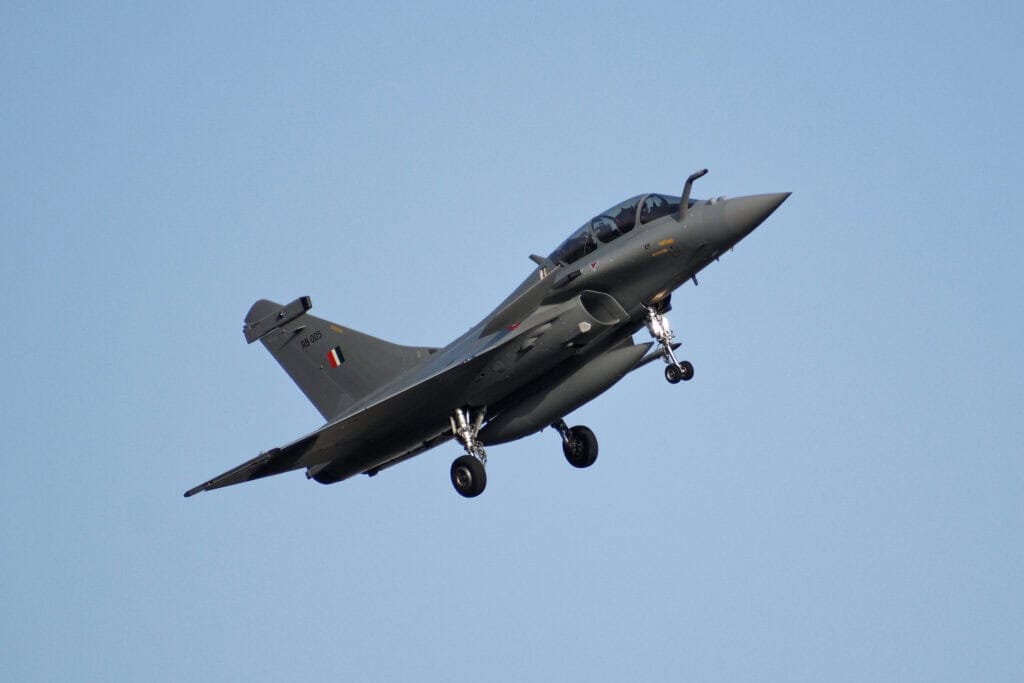

The IAF wants the next 96 Rafale jets built in India with at least 40 per cent indigenous content, rising to 60 per cent by the final batch, according to a report by ThePrint.
India wants its next Rafale fighters to carry a far heavier Indian stamp than the jets it already flies. According to a report by ThePrint, the Indian Air Force has asked for at least 40 per cent indigenous content in the 96 Rafale jets that France would build in India, with that share climbing to 60 per cent by the final batch. The demand sits in a Letter of Request that India sent to France in late May. France is expected to respond by September, according to the report.
The proposed deal covers 114 Rafale jets in all. It takes the government-to-government route rather than a commercial purchase. The report says 18 jets would arrive in flyaway condition while the other 96 roll off an Indian line. The aircraft would come in the upgraded F4 standard. That version adds new satellite and intra-flight data links, communication servers and software-defined radios. That pushes the jet further into networked combat while aligning it with France’s longer-term air warfare plans.
The path to 40 per cent is already taking shape, according to the report. Dassault Aviation has handed the Rafale fuselage to Tata. It is now hunting for an Indian partner to build the wings. The company has also tied up local firms for line-replaceable units and other components, while Thales and Bharat Electronics Limited work together on the AESA radar. The same Thales-BEL link has reportedly widened to cover microwave modules for the Rafale’s SPECTRA electronic warfare suite. Dassault has also assured India that a maintenance and overhaul facility could lift overall indigenisation toward 80 per cent, ThePrint reports.
On money and timing, the report offers some clarity. Sources cited in the report say the cost should stay within the roughly 3.25 lakh crore rupees already set aside. If India signs early in 2027, deliveries of the first 18 flyaway jets would begin from 2030. The numbers and terms still sit at the request stage, so they could shift once France replies and formal talks begin.
The significance runs beyond one fighter order. India already flies 36 Rafale jets it bought ready-made, with little local manufacturing involved. The new 40 to 60 per cent demand marks a clear shift, as India seeks more industrial value from this far larger batch in step with the wider Make in India push. The same instinct runs through India’s wider aviation programmes, from transport aircraft to its fifth-generation fighter ambitions. The goal each time is to own more of the technology rather than simply import it. A heavier Indian share also builds the supplier base and skills that future projects can draw on.
A note of caution belongs here. The figures come from ThePrint’s reporting, which cites defence and security sources rather than any official statement from the Ministry of Defence or Dassault. Indigenisation targets are notoriously hard to hit. The gap between a request and a signed contract leaves plenty of room for the numbers to move. What the report does signal is the direction of travel. India is no longer content to buy finished fighters. The next Rafale deal will count its value in jobs and technology as much as in rupees.