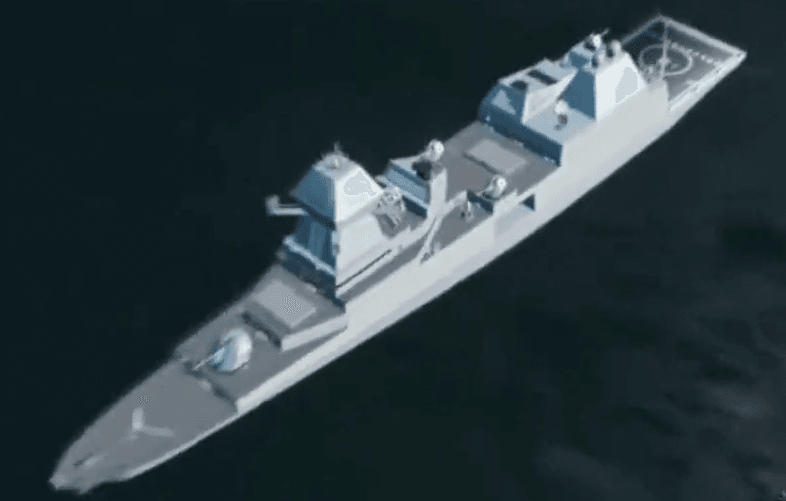

Somewhere in the drawing offices of the Indian Navy’s Warship Design Bureau sits the outline of a ship unlike anything the country has built before. It has a name that gives nothing away, Project 18 and a scale that gives away everything. If it is built as planned, it will be the largest combatant vessel ever constructed in an Indian yard. It would be a warship so large that the word destroyer begins to feel like an understatement. This week the programme was back in the news. Fresh reporting put its likely cost near 80,000 crore rupees, reviving a debate about just how ambitious India’s navy has become.
What Was Actually Said
Strip away the excited headlines and the firm ground is narrow but real. Vice Admiral Sanjay J. Vatsayan, the Vice Chief of the Naval Staff, spoke at a recent naval commanders’ conference. He told reporters the force had settled on a robust design for the ships. It hoped to secure the Acceptance of Necessity within the current financial year.
That phrase, Acceptance of Necessity, is where every big Indian defence project begins. It is the formal nod from the Defence Acquisition Council that says a requirement is real and worth pursuing. Every programme must pass that gate before any contract can follow. Vatsayan said that clearing it this fiscal year would let the Navy award construction contracts within the next two years. Everything else swirling around Project 18, the exact tonnage, the weapons fit, the final number of hulls, remains reported detail rather than confirmed fact. It pays to hold those figures loosely until the Navy commits to them in writing.
From Destroyer to Something Closer to a Cruiser
Here is where the ambition shows. India’s current frontline destroyers, the Kolkata class and the newer Visakhapatnam class, displace somewhere between 7,500 and 8,200 tonnes fully loaded. Reported figures for Project 18 run far higher, with most accounts placing it around 11,000 to 13,000 tonnes.
That is a jump of a different order. A warship of that size stops behaving like a traditional destroyer. It starts to resemble what an earlier era would have called a cruiser. Think of a larger, longer-legged vessel built to stay at sea for weeks and carry a heavier load of sensors, weapons and fuel. The reported growth is not vanity. A bigger hull means more space for missiles and more electrical power for radars and the energy weapons still to come. It also brings the endurance to operate far from home for weeks at a stretch. That is exactly the profile a navy needs for the 2040s. Its ambition is to anchor carrier battle groups across the Indian Ocean and beyond.
A Floating Technology Demonstrator
The most interesting thing about Project 18 is not its size. It is an idea described repeatedly in reporting on the programme. These ships are meant to serve as floating showcases for Indian technology reaching maturity at the same moment.
Consider what that means in practice. Over the past decade India has fielded, or nearly fielded, a whole family of indigenous naval systems. They include the Kusha long-range air defence interceptor that DRDO flight-tested this year. There is also the BrahMos cruise missile and its faster successors, plus an expanding set of home-grown radars and electronic warfare suites. A ship designed from a blank sheet today can be built around all of them at once. Older ships had such systems bolted on as awkward afterthoughts. Reports suggest the class will carry a deep magazine of vertical-launch cells. It would integrate air defence, land attack and anti-ship weapons under a single indigenous combat system.
There is a quieter theme running underneath the weapons list and it is about people. Reporting on the programme points to heavy automation, enough to cut the crew by roughly a quarter compared with existing destroyers. Fewer sailors for a larger ship means lower running costs across a hull that might serve for forty years. It reflects a design philosophy built around software and sensors rather than sheer manpower.
Who Would Build It and When
The shipyards in the frame are the familiar names. Mazagon Dock Shipbuilders and Garden Reach Shipbuilders and Engineers are the leading candidates to build Project 18. The two public yards have delivered India’s recent destroyer and frigate classes. Between them they hold most of the country’s accumulated knowledge of complex warship construction and a project this demanding would test even that.
The scale of the challenge has produced a sensible hedge. Because Project 18 is so large and so new, reporting suggests the Navy is weighing an interim class. Informally called Project 15C, it would build further improved versions of the proven Visakhapatnam design. The logic is practical. Building a run of known ships keeps the yards busy and the workforce sharp while the far harder P-18 design matures. That way no gap opens in either the fleet or the industrial base during the long years a clean-sheet warship takes to develop.
On timing, the honest answer is that this is a programme for the next decade, not this one. Even on an optimistic reading, the maths is sobering. An Acceptance of Necessity this year and contracts within two would still put first steel some years away and first deliveries into the 2030s at the earliest. Warships of this complexity rarely arrive early.
Why It Matters
For all the caveats, the direction of travel is unmistakable. India has spent decades importing its biggest warships or building them to foreign designs. Project 18 is a statement that those days are meant to end. A navy that can design and build an 11,000 tonne combatant around its own weapons and sensors is a different kind of navy. It no longer waits on anyone else’s permission to field its most powerful ships.
That is the real significance buried under the tonnage figures and the cost estimates. Project 18 is not just a bigger destroyer. It is a test of something harder. Can Indian industry build, at the very top end of complexity, the kind of ship that only a handful of countries can produce at all? The design, by the Navy’s own account, is ready. The next two years and the AoN that Vice Admiral Vatsayan is hoping for, will show whether the ambition survives contact with a budget.