On the nights of early May 2025, the skies over Punjab, Jammu, Rajasthan and Gujarat lit up with something India had prepared for but never tested at scale. After the Pahalgam terror attack and India’s retaliatory strikes, Pakistan launched waves of drones and missiles at military bases and cities across the western front. Almost none got through. India’s layered air defence, with the Russian built S-400 at the top of the stack working alongside indigenous systems and a networked command grid, tracked the incoming swarm and shot it down piece by piece. Operation Sindoor became the first real proof that India could defend its skies against a saturation attack.
It also became a turning point. Within three months Prime Minister Narendra Modi stood at the Red Fort and announced Mission Sudarshan Chakra, a plan to build a complete national air defence shield by 2035. The pieces of that shield already have names that defence watchers know well: the S-400 Triumf, the indigenous Project Kusha and the older Akash and Barak families that fill the gaps below them. Understanding how these fit together explains where India’s air defence is today and where it is headed.
Why India Needs a Layered Shield
India sits between two nuclear-armed neighbours who are both building the kind of weapons that air defence exists to stop. The threat is no longer a handful of fighter jets crossing the border. It is volume and variety arriving at once.
Pakistan demonstrated the new playbook during Operation Sindoor. It sent coordinated drone swarms and cruise missiles designed to probe for seams in the defensive grid, hoping that enough cheap threats fired together would overwhelm the expensive interceptors guarding key sites. Islamabad has since announced an Army Rocket Force Command, signalling a deeper investment in missiles and it fields Chinese-supplied fighters armed with the long-range PL-15 air-to-air missile.
China presents a larger and more capable version of the same problem. The People’s Liberation Army holds a vast and growing arsenal of ballistic and cruise missiles, is fielding hypersonic glide vehicles that fly fast and manoeuvre unpredictably and operates the J-20 stealth fighter that conventional radar struggles to see. A shield built only for Pakistan would be inadequate against Beijing, so India has to plan for the harder threat while staying ready for the closer one.
This is why a single system, however capable, can never be enough. The answer everywhere in the world is layering.
How Layered Air Defence Actually Works
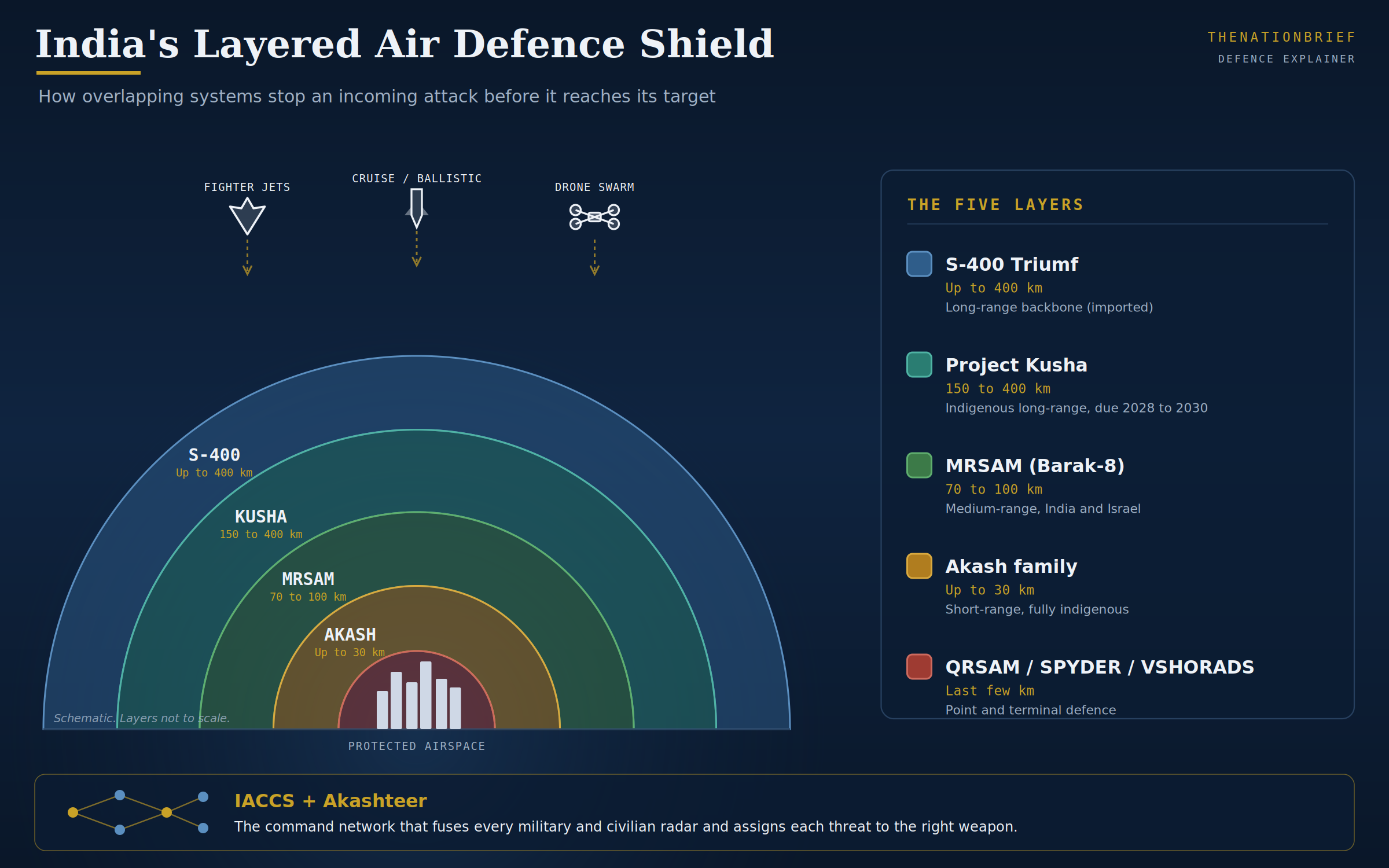
Graphic: TheNationBrief
The logic of a layered shield is simple. You stack systems of different ranges so that anything slipping past the outer ring meets another interceptor closer in and then another after that. An incoming aircraft or missile has to survive every layer to reach its target and the odds of doing so fall sharply with each one.
The outer layer reaches out hundreds of kilometres to engage high-value targets such as enemy radar planes, refuelling tankers and incoming missiles before they get close. The middle layers handle fighters, cruise missiles and drones at medium range. The inner and terminal layers form the last line, catching whatever leaks through, including low-flying drones and precision munitions in the final seconds.
None of this works without a nervous system to tie it together. India runs the Integrated Air Command and Control System, or IACCS, an automated network that fuses data from military and civilian radars into a single picture of the sky and assigns each threat to the right weapon. The Army’s Akashteer network does the same job for ground forces. The whole point is that a radar in one place can cue an interceptor in another, so the shield behaves as one organism rather than a scatter of separate guns.
The Current Shield: What India Fields Today
India already operates a working multi-layered air defence. Operation Sindoor proved the lower and middle tiers in combat and the top tier is filling out fast.
The S-400 Triumf: the long-range backbone
At the top sits the S-400, which India agreed to buy from Russia in 2018 in a deal worth roughly 5.4 billion dollars for five squadrons. The system reaches out to 400 kilometres and can track and engage dozens of targets at once. The Indian Air Force operates it under the name Sudarshan and the squadrons anchor the outer edge of the country’s air defence.
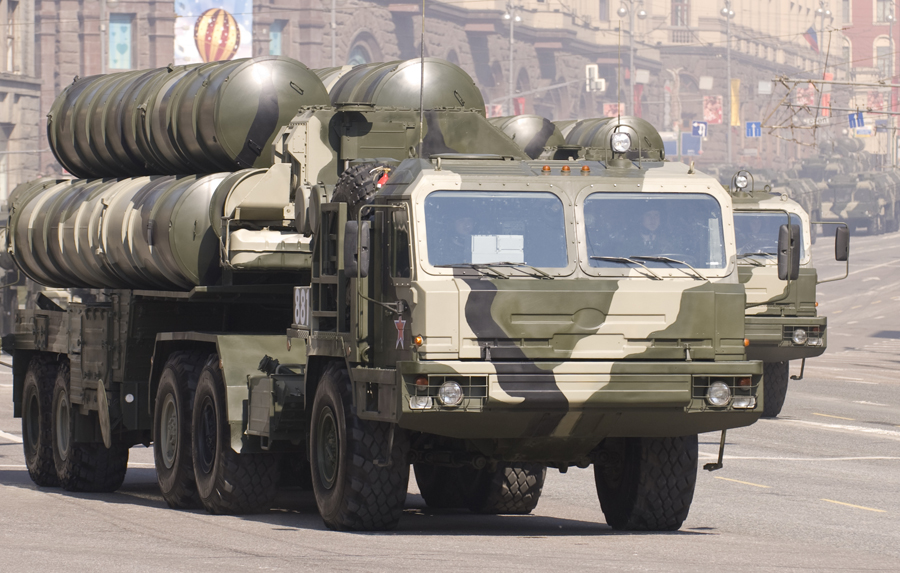
Aleksey Toritsyn / Wikimedia Commons, CC BY-SA 3.0
Three squadrons are already deployed. The first became operational in December 2021 along the western border with Pakistan, the second in 2022 facing China in the north and the third in early 2023 covering Rajasthan and Gujarat. The Russia-Ukraine war delayed the rest, but the fourth squadron is due around May 2026, timed near the first anniversary of Operation Sindoor, with the fifth expected by late 2026. During Sindoor itself, Indian officials credited the S-400 with a decisive role in breaking up the Pakistani attack and reports described one of the longest surface-to-air kills ever recorded, at a range of around 314 kilometres.
India is not stopping at five. In March 2026 the Defence Acquisition Council cleared the purchase of five more S-400 squadrons as part of a defence package worth about 2.38 lakh crore rupees, a move that would double the inventory to ten and turn the system from a frontier deterrent into a nationwide backbone.
The indigenous middle and inner layers
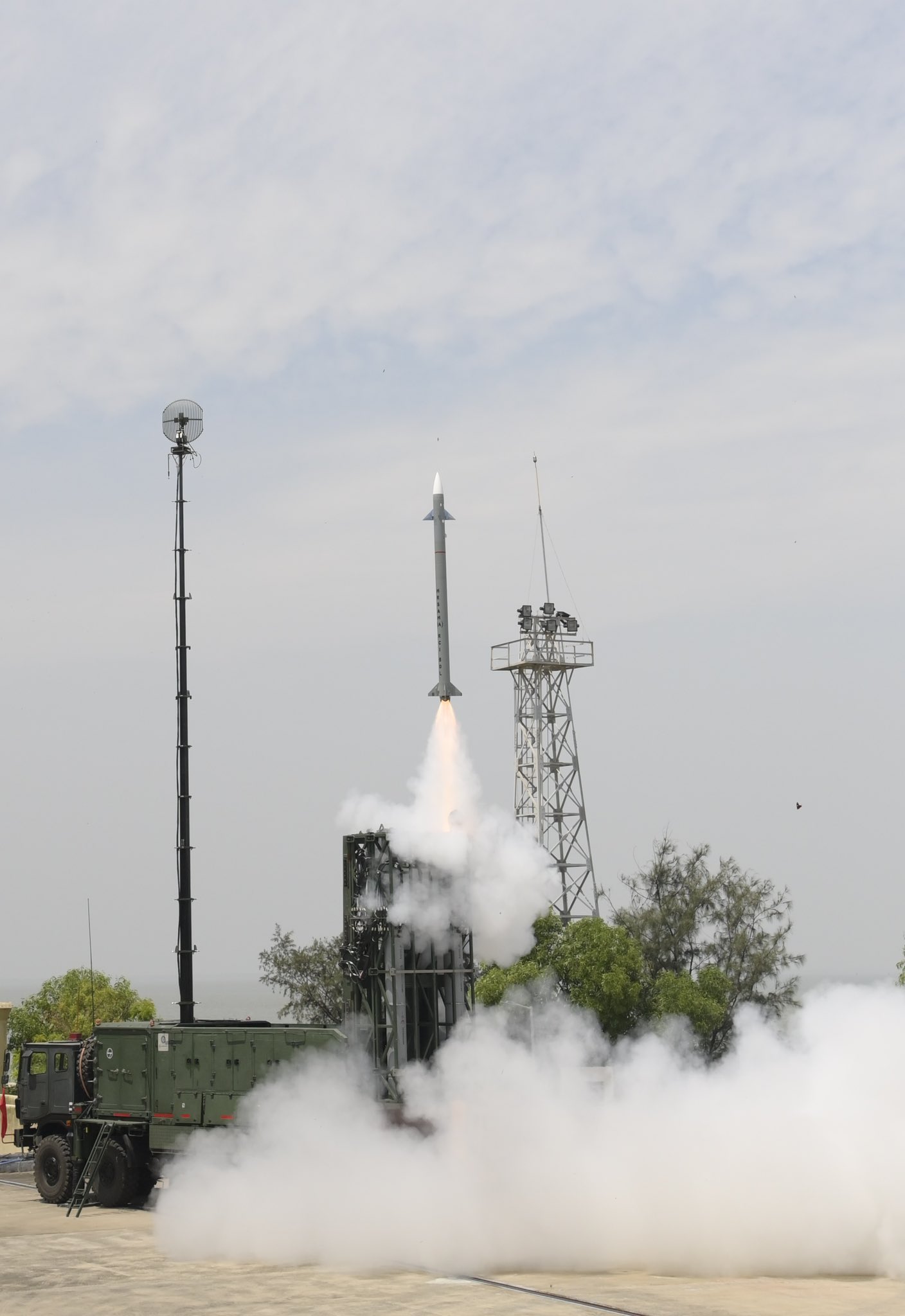
Credit: Indian Army
Below the S-400, India fields a thickening web of home-built and co-developed systems. The MRSAM, derived from the India-Israel Barak-8, covers the medium band out to roughly 70 to 100 kilometres. The Akash family, fully indigenous, handles shorter ranges, with the newer Akash-NG and Akash Prime variants improving reach and the ability to kill drones. Closer in sit the Quick Reaction Surface-to-Air Missile, the SPYDER system and shoulder-fired VSHORADS for the last few kilometres. The capital region gets extra protection from the NASAMS-II point-defence system.
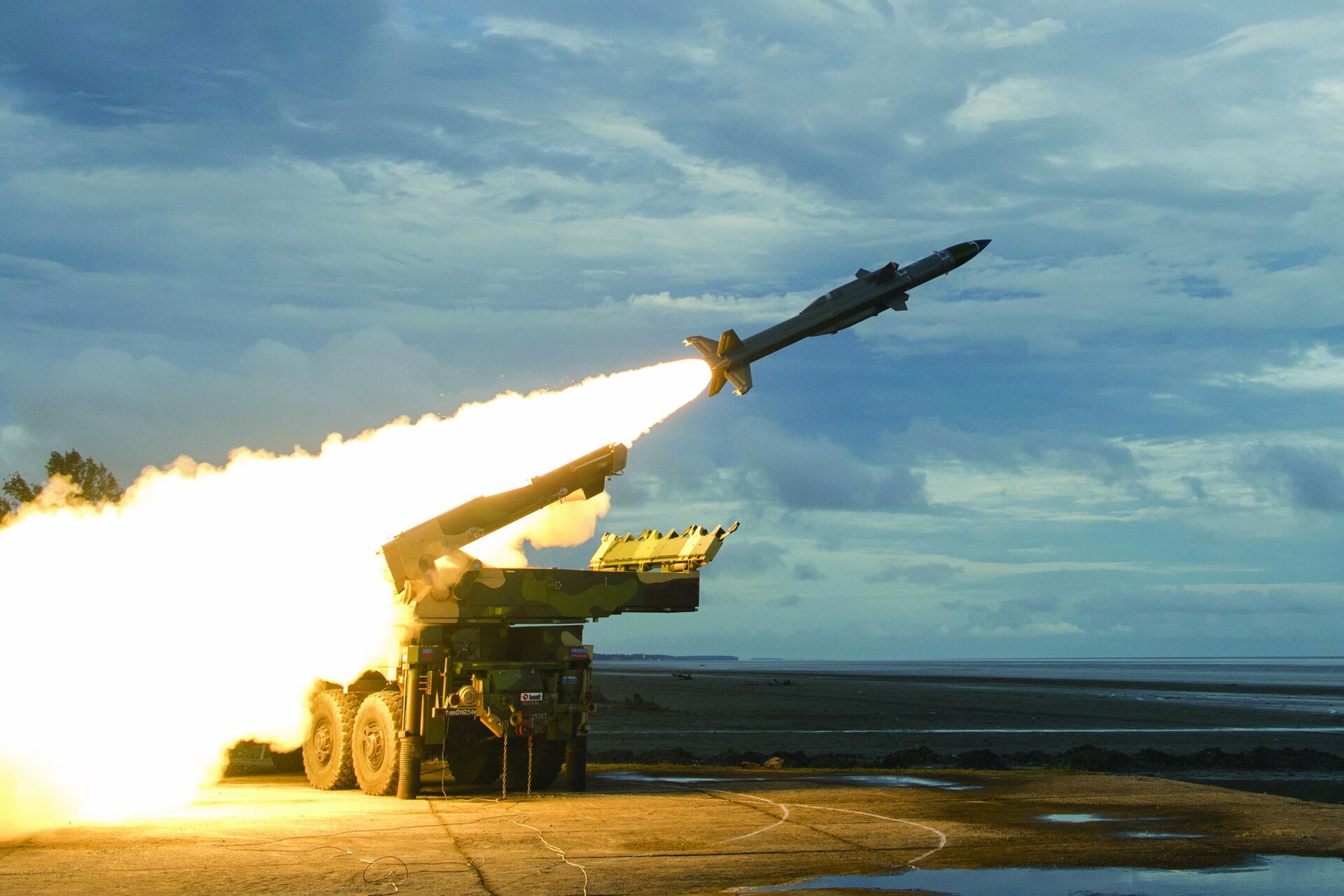
Credit: DRDO
India also runs its own two-tier Ballistic Missile Defence programme, built to intercept incoming ballistic missiles both outside and inside the atmosphere. Together these layers gave the country the depth that showed during Operation Sindoor, where cheap drones and missiles met interceptor after interceptor.
Five Lessons From Operation Sindoor
- Drone swarms are now mainstream
- Air defence must be networked
- Long-range SAMs remain critical
- Counter-UAS systems are essential
- Indigenous production matters
Project Kusha: India’s Own Long-Range Shield
The gap in this picture is obvious. The long-range top tier depends on an imported system whose deliveries stalled the moment its supplier went to war. Project Kusha is India’s answer.
Cleared by the Cabinet Committee on Security in May 2022, with formal approval in September 2023 for five Air Force squadrons at a cost of about 21,700 crore rupees, Kusha is a DRDO-led programme to build a long-range surface-to-air missile system at home. Specifically, it is designed around three interceptors of escalating reach. The M1 strikes targets up to 150 kilometres away and handles fighters, drones and cruise missiles. Above it, the M2 extends to 250 kilometres and is tuned for stealthier and faster threats. Finally, the M3 reaches between 350 and 400 kilometres to kill the big, high-value targets such as enemy AWACS planes and tankers. In each case, the interceptor is built for a single-shot kill probability above 80 per cent.
The system rides on a modern sensor base. A gallium-nitride AESA radar developed in India tracks and guides, while a dual-pulse motor gives the interceptor the energy to chase agile targets in the final approach. Kusha plugs straight into the IACCS grid, so it fights as part of the network rather than alone.
Update, July 2026: DRDO conducted the maiden flight test of the Kusha M1 on 23 July 2026 from APJ Abdul Kalam Island off the Odisha coast, the first flight of the programme. Integrated user trials follow, with the M2 and M3 entering their own cycles over the next two years. Phased induction into the Air Force and later the Navy remains planned between 2028 and 2030. Bharat Electronics and Bharat Dynamics are already building early hardware, with private firms drawn in to scale production.
Why Does Kusha Matter?
Kusha matters for two reasons. It fills the band between the 80-kilometre MRSAM and the 400-kilometre S-400, giving India a continuous wall of coverage. It also cuts dependence on a foreign supplier: the DRDO chief has called the system comparable to Russia’s S-500 and at roughly 21,700 crore rupees for five squadrons it costs a fraction of what the imported S-400 squadrons did. After Operation Sindoor the Air Force asked the DRDO to speed the whole programme up.
Sudarshan Chakra: The Mission That Ties It All Together
On 15 August 2025, from the ramparts of the Red Fort, Prime Minister Modi gave the whole effort a name and a deadline. Mission Sudarshan Chakra, named for the divine discus of Lord Krishna, aims to deliver a complete national defence shield by 2035. India describes it as both a shield and a sword, a system that does not merely block an attack but strikes back at whoever launched it.
The mission is not a single new weapon. It is an architecture meant to weld everything together: the S-400, Project Kusha, the Akash and Barak families, the Ballistic Missile Defence layers, counter-drone grids and the IACCS and Akashteer networks, all fused by artificial intelligence, big-data analysis and, in time, space-based sensors. The DRDO leads it. Defence Minister Rajnath Singh set up a committee in September 2025 to draw a workable roadmap, split into a phase due around 2028 to 2029 and a second phase reaching to 2035.
The comparison India’s planners reach for is Israel’s Iron Dome and the United States’ proposed Golden Dome, layered shields that protect not just military bases but cities and infrastructure. That ambition explains the partnership with Israel: during Modi’s February 2026 visit, the two countries elevated ties to a Special Strategic Partnership, with reports of Israeli willingness to share air and missile defence technology.
Analysts make one point worth repeating. A version of Sudarshan Chakra already exists. The systems that intercepted Pakistan’s attack in May 2025 were the first working draft of the shield. The mission is not starting from zero; it is hardening, densifying and networking what is already in the field.
The Challenges Ahead
The vision is bold and the obstacles are real. Stitching Russian, Israeli and Indian systems into one seamless network strains compatibility, because each was built to its own standards. Intercepting hypersonic weapons that fly at more than five times the speed of sound and change course in flight is a problem no country has fully solved. Drone swarms, where hundreds of cheap machines arrive together, can still threaten to exhaust expensive interceptors, which is why India is investing in directed-energy weapons and dedicated counter-drone grids.
There are domestic gaps too. Long-range radars and advanced seekers that match the best in the world are still maturing and Indian defence programmes have a long history of slipping past their first deadlines. Cost is the quiet constraint behind all of it, since integrated air and missile defence is among the most expensive capabilities a nation can build. The United States expects its Golden Dome to run into the tens of billions of dollars.
None of these is a reason to doubt the direction. India has chosen to layer indigenous and imported systems together rather than bet on any single supplier and Operation Sindoor showed the approach works under fire.
The Road Ahead
India’s air defence story has moved in a single direction over the past decade. It has gone from buying a famous foreign system to building its own equivalent and from fielding scattered guns to weaving them into one networked shield with a national name. The S-400 gives it reach today. Project Kusha will give it reach it owns outright. Sudarshan Chakra is the plan to bind them and everything below them, into a single defensive and offensive umbrella over the whole country.
Air superiority in South Asia no longer rests on the number of fighter jets a country can put up. It rests on whether it can see, track and kill everything an adversary throws at it, from a stealth jet at the edge of radar range to a cheap drone skimming the treetops. The night skies of May 2025 were the first test. The decade ahead will decide how complete the shield becomes.