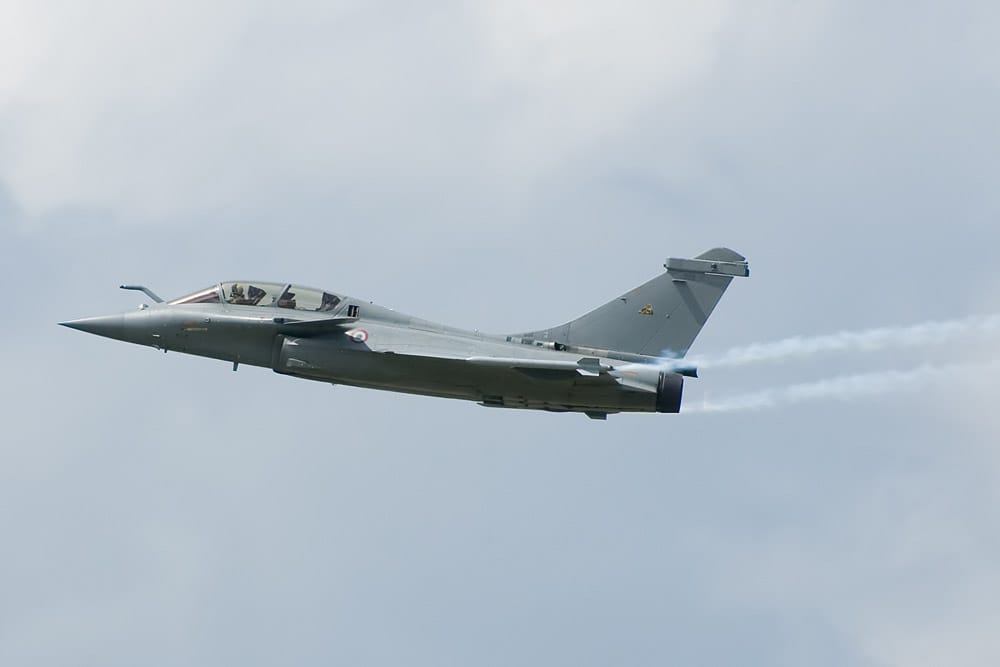

The most telling detail in France’s response to India’s Rafale proposal is not a price or a delivery date. It is a factory. For the first time in the aircraft’s history, Dassault Aviation has offered to build a Rafale final assembly line outside France. It would sit on Indian soil, in partnership with the Tata Group. That single concession says more about how the balance of this deal has shifted than any figure in the fine print.
What France Put on the Table
According to ThePrint, which first reported the details, the French government has submitted its technical and commercial response to India’s planned purchase of 114 Rafale fighters. The document reads less like a sales pitch than an industrial blueprint. India received the proposal on 29 July and is still studying it.
The centrepiece is that assembly line. ThePrint reported that Dassault has proposed setting up the Rafale final assembly line in India with Tata. It would be the first time the French firm assembles the jet anywhere outside its home country. Around that spine, the proposal maps out how the rest of the aircraft would come together. It pairs each major French supplier with an Indian partner.
The pairings, as ThePrint described them, follow the logic of who does what. Missile maker MBDA would work with Larsen and Toubro. Thales, which builds the radar and avionics, would partner the Mahindra Group. Engine maker Safran would team with Hindustan Aeronautics Limited. That HAL relationship would stretch beyond the Rafale into India’s own stealth fighter, the Advanced Medium Combat Aircraft programme.
Why the Indian Partners Matter
Read the list again and a pattern jumps out. This is not one company selling jets to another government. It is India asking four French firms to hand pieces of their industrial know-how to four Indian ones.
That distinction is the whole point of the exercise. The Indian Air Force has asked for a minimum of 40 percent indigenous content in the India-built Rafales, rising to 60 percent in the final production batch. That figure comes from ThePrint’s earlier reporting. Hitting those numbers is impossible without exactly this kind of partnership structure, where an Indian firm learns to build a part rather than simply buy it. ThePrint reported that Dassault has also offered a Maintenance, Repair and Overhaul facility in India. Over the fleet’s lifetime, that could push effective domestic value addition close to 80 percent.
This pattern echoes what is happening elsewhere in India’s defence sector, from private firms building radar components to co-production deals with other partners. The Rafale plan, if it holds, becomes one of the largest tests yet of a simple question. Will foreign primes genuinely share the work, or just the final product?
The Numbers Behind the Deal
The scale here is considerable. ThePrint reported that the costs France has proposed fall within the Defence Acquisition Council’s cleared ceiling of 3.25 lakh crore rupees for the 114 aircraft.
If the contract is signed, the arithmetic of India’s Rafale fleet grows quickly. The Air Force already flies 36 Rafales and would add another 114 under this deal, taking its own count to 150. Add the 26 Rafale M jets already contracted for the Navy and India’s total Rafale order would reach 176 aircraft. That would make India one of the largest operators of the type anywhere in the world, France included.
What Happens Next
For now, everything remains a proposal under evaluation and it pays to remember that. ThePrint quoted sources saying most of India’s major requirements had been met and that the plan was under study. Cost and contract negotiations would follow if no major clarifications are needed. Officials cited in the report want to conclude talks and sign before the current financial year ends.
That timeline is ambitious and defence deals of this size rarely move in straight lines. India has spent the better part of two decades trying to expand its Rafale fleet, through one collapsed tender after another. A note of caution is warranted until ink meets paper. What has changed is the shape of the offer on the table. France is no longer just selling India an aircraft. It is offering to help India build one. That shift, if it survives the negotiating room, would matter long after the last of the 114 jets rolls off a line in India.
This article is based on reporting by ThePrint. The proposal has not been officially confirmed by the Indian or French governments.